Graffiti_graffiti alphabet_3d graffiti alphabet_graffiti alphabet letterGraffiti_graffiti alphabet_3d graffiti alphabet_graffiti alphabet letter

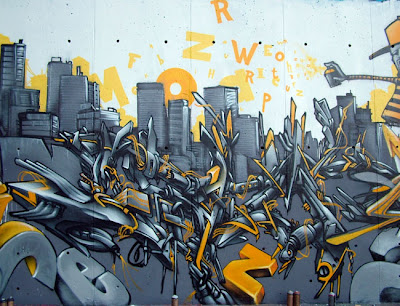
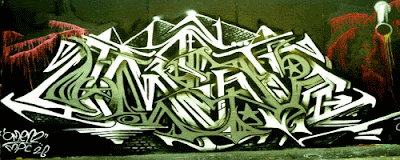
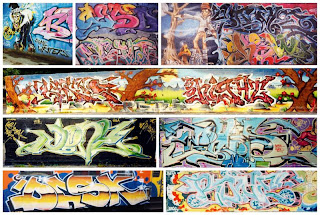
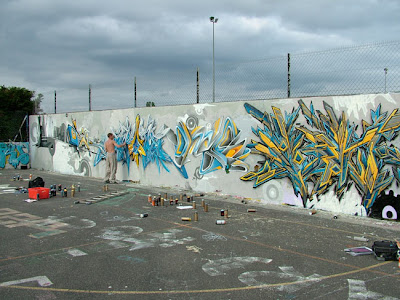
To the general population the word "Graffiti" conjures up visions of names and symbols illegally scrawled on walls but to others it is considered a beautiful and overlooked art form. An art form that even despite its general dislike has found its way into mainstream America with huge corporations using it in their products as well as their advertising to target America's youths as potential customers. It's constantly being shown in fine art galleries across the world and has come a long way from its 1st century roots where symbols and drawings were carved into rocks as a form of communication. Although it's hard to pinpoint how modern day graffiti started, the general consensus is that it started in the 1940's during World War II with the phrase "KILROY WAS HERE" by a man named James J. Kilroy who worked as a ship inspector for Bethlehem Steel in Quincy, Massachusetts. Kilroy was in charge of inspecting rivets to make sure they were put in correctly and would write his name, JJ Kilroy, next to them in chalk when he was completed. The workers would get paid by how many rivets they would install and soon Kilroy realized that he would be checking some of the same rivets twice because workers would wipe away the chalk markings to get paid for more then they had really installed. It was as this time that Kilroy switched over to using a yellow crayon because it was much harder to get off then the chalk was. In the late 1960's a young man named Darryl McCray from Philadelphia became the first "tagger" on record. He wrote his nickname CORNBREAD all over his neighborhood in hopes of gaining the attention of a girl whom he liked at the time. The addiction of writing his name all over the city became a full time job for CORNBREAD and soon after starting his rampage to write his name everywhere he teamed up with KOOL EARL and the first graffiti "tag team" was born. |
...By 1970 graffiti had made its way to New York and young people started writing their nicknames all over their neighborhoods and eventually they gravitated towards New York City's subway system as a way to get their names to travel across the city. What set the New York writers apart from their Philly counterparts is that they added a number on to the end of their tag to represent the neighborhood they were from. Some of the early writers were JULIO204, JUNIOR161, CAY161, EDDIE181, LEE163, STAYHIGH149, TRACY168, SPIN1, PHASE2 and of course the infamous, TAKI183.In July 1971 the New York Times printed an article in which they had interviewed TAKI183 and as a result, graffiti in New York City exploded at a mind blowing rate!!!
This first masterpiece style was called "signature pieces" in which a person would tag their name and then outline it with another color. A writer named SUPERCOOL223 took this style to a whole new level when he started doing the outline of his name and then filling it in with color which allowed him to make his name much larger then what other people were doing at the time. SUPERCOOL223 along with people like PHASE2 continued to push the boundaries with adding stars, stripes and other designs into their bubble lettered pieces. Every few months something new was being done. In 1973 PISTOL1 was the first writer to add a 3d or shadow to his letters and soon after that FLINT707 was the first writer to do a "top to bottom" which meant writing his name from the top of the train to the bottom of the train and it wouldn't be long before writers were taking up the whole side of the train for their paintings......In late 1974 and early 1975 the trains had pieces all over them and the "throw up" became a standard sight on the trains. Throw ups were a quick way to get your name up not to mention a savings on paint. The throw up gained popularity courtesy of the all city throw up king, IN aka KILL3. Together with his partner TO aka MICKEY they put the TOP crew on the map. |
Coloring Pages Kids, You Are Here: |
 |  |  |  |
Create Your Coloring Desktop Folder (ex: Long Neck Jamie's Graffiti Alphabet Coloring Pages)
Coloring Pages Kids, See How to Print Ou t Coloring Pages...How To Make Cool Stickers - Scrapbook Pics - Greeting Cards
|
 |  |  |  |  |
 |  |  |  |  |
 |  |  |
 |  |  |  |  |

The first known example of "modern style" graffiti survives in the ancient Greek city of Ephesus (in modern-day Turkey) and appears to advertise prostitution, according to the tour guides of the city. It stands near the long mosaic and stone walkway and consists of a handprint, a vaguely heart-like shape, a footprint and a number. This purportedly indicates how many steps one would have to take to find a lover, with the handprint indicating payment.
Ancient Pompeiian graffito caricature of a politician.The Romans carved graffiti into their own walls and monuments, and examples of their work also exist in Egypt. The eruption of Vesuvius preserved graffiti carved on the walls of Pompeii, and they offer us a direct insight into street life: everyday Latin, insults, magic, love declarations, political consigns. Hadrian's Villa at Tivoli also has several examples. One example has even survived that warns: "Cave Canem", which translates as "Beware of the dog," next to a picture of the dog in question.
However, not only Greeks and Romans learn how to graffiti: the Mayan site of Tikal in Guatemala, also contains ancient examples. Viking graffiti survive in Rome and at Newgrange Mound in Ireland, and Varangians carved their runes in Hagia Sophia in Constantinople. The Ancient Irish inscribed stones with an alphabet called Ogham -- this standard mode of writing may not classify as graffito.
Later, French soldiers carved their names on monuments during the Napoleonic campaign of Egypt in the 1790s.
Art forms like frescoes and murals involve leaving images and writing on wall surfaces. Like the prehistoric wall paintings created by cave dwellers, they do not comprise graffiti, as the artists generally produce them with the explicit permission (and usually support) of the owner or occupier of the walls.